When and Why You Should Redesign Your Website
As a small business owner, you likely get countless emails and phone calls stating why your website desperately needs a website redesign. Perhaps some of these cold callers go through what seems like a lot of effort to give you advice or even record a video for you with suggested website improvements. Ultimately, they just need a web design job and are trying to get your business through this sales tactic!
This article fights back against the common marketing push that your website needs to be constantly redesigned and tries to highlight when it's truly necessary and an ideal timeline. From my over two decades of designing small business website, learn why reevaluating your website's design is important and when to plan on redesigning your website.
Table of Contents
- What Is a Website Redesign?
- How Often Should You Redesign your Website?
- Why Redesign a Website
- Increasing Percentage of Mobile Users
- Screen Sizes and Screen Resolutions Continue to Grow
- Web Development Technology Has Improved
- Accessibility, Privacy, and User Experience Best Practices Have Changed
- Contact Preferences for Customers and Company Teams Have Shifted
- Search Engine Optimization Standards Have Changed
- You Own Your Website Design Quality, Not Your Web Designer
What Is a Website Redesign?
Redesigning a website involves making significant changes to the layout, design, and functionality of the site. Website redesign often includes modifying the color scheme, modernizing graphics and imagery, updating the navigation experience, improving site speed and responsiveness, incorporating new features, and enhancing user experience.
Redesigning a website typically requires a more thorough planning process and may involve hiring a web design firm to complete the redesign process.
However, redesigning a website is not the same as updating your website's content.
What Is a Content Refresh?
Updating content on a website is a regular and ongoing task that involves adding fresh content, updating outdated information, and improving the overall quality of the content on the site. This includes creating blog posts, adding new product or service information, and making changes to existing pages to keep the site current and relevant.
While updating content is important for maintaining a dynamic and engaging website, it is not the same as redesigning the site. A website redesign is a far more comprehensive overhaul of the website's appearance and functionality compared to simply updating content.
How Often Should You Redesign your Website?
When considering how often you should redesign your website, it's important to weigh the factors at play. From a quick Google search, you'll find most web designers and marketers suggest a website redesign every 3 years. However, in our opinion, this is far too frequent for small businesses with limited time and financial resources.
Instead, we recommend aiming for a redesign every 5-6 years, allowing you time to budget and plan accordingly. Some websites may be able to last longer without a redesign, but it's crucial to at least start seeking proposals and planning for a redesign around the 5-6 year mark.
Knowing when it's time to redesign your website involves a balance of assessing the functionality, aesthetics, and overall performance of your website to ensure it remains relevant and user-friendly for your target audience.
Why Redesign a Website
The sections below detail common reasons for a website redesign. Though not all may apply to your website, you can use these as a litmus test to determine if you should start budgeting for a website redesign in the near future.
Increasing Percentage of Mobile Users
The increase in mobile users is a significant trend in today's digital landscape. While responsive websites have been in existence for over a decade, the shift in consumer behavior towards heavy mobile device usage cannot be overlooked.
Maybe you already have a "mobile-ready website," but was that a secondary priority to make sure you had the mobile friendly box checked?
By analyzing website traffic through tools like Google Analytics or Ahrefs Analytics, businesses may be surprised to find that they are receiving more visitors on mobile devices than on desktops. As such, it's critical to adopt a mobile-first approach in their design and development.
This shift underscores the importance of optimizing the mobile user experience to cater to the growing number of users who prefer to browse and shop on their smartphones. Even those who were once hesitant to shop online via their phones are now embracing mobile commerce as the norm. As this trend continues to rise, it is imperative for businesses to adapt their strategies to meet the needs and preferences of mobile users.
Screen Sizes and Screen Resolutions Continue to Grow
Screen sizes and resolutions are constantly evolving as monitors become wider and more advanced. From the traditional square monitors to the 16:9 ratio and now to ultrawide screens, the trend towards larger displays is clear. It is crucial for web developers to ensure that their websites are optimized for these larger screens, including 2k, 4k, and 8k resolutions.
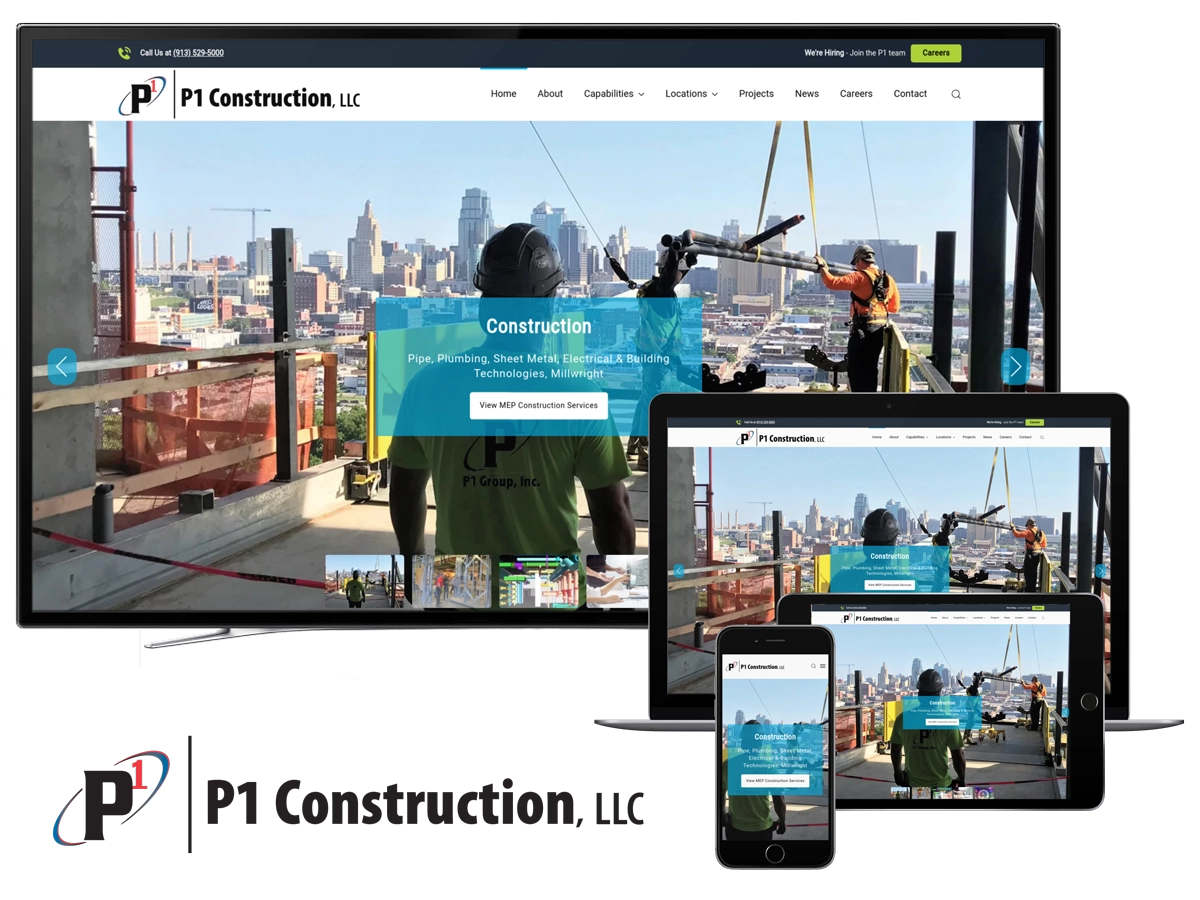 P1 Construction, LLC - Example of responsive screen sizes including large, high-resolution displays.
For mobile devices, you have to adapt for more layouts and ratios than ever. Consider how an iPhone's screen may look different than a Google Pixel.
By incorporating responsive design and web-optimized high-resolution graphics, websites can adapt to different screen sizes and resolutions, allowing for a visually appealing and user-friendly experience across all devices.
Web Development Technology Has Improved
Web development technology experiences significant advancements nearly every year, leading to a compounding transformation in the way websites are designed and developed. It is crucial for businesses to stay updated with the latest trends and technologies to ensure their website remains competitive and delivers an exceptional user experience.
There are endless possibilities to enhance the overall functionality, aesthetics, and user experience of a website. By regularly exploring new technology and web design trends, businesses can leverage these innovative tools to attract and engage visitors effectively.
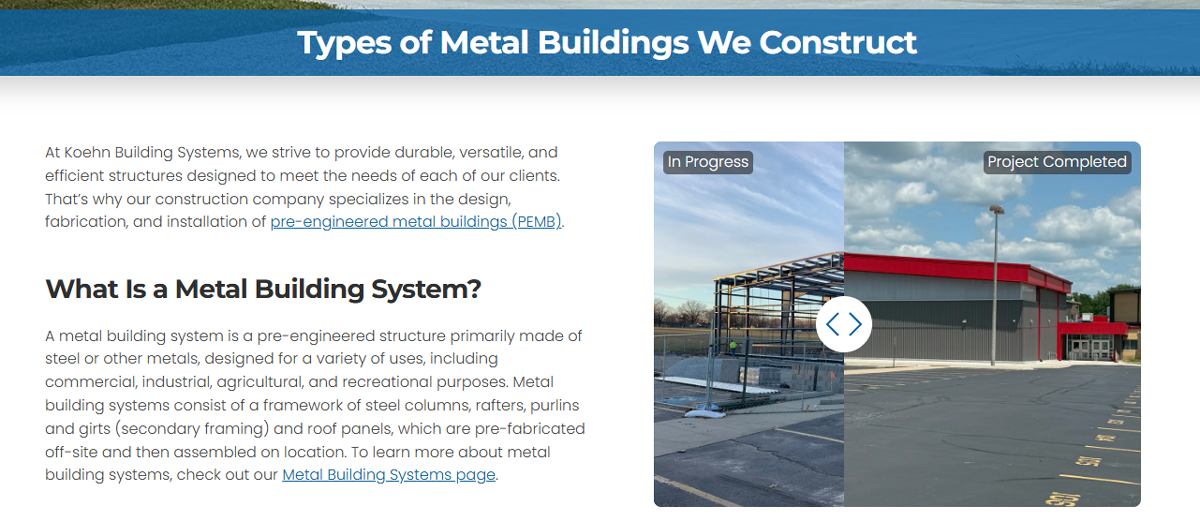 Koehn Building Systems - example of interactive comparison slider
Even if your website's core components, plugins, and extensions are being updated regularly, there is still likely new technology that could benefit your website.
Accessibility, Privacy, and User Experience Best Practices Have Changed
Accessibility best practices have undergone significant changes in recent years. Design standards like minimum font size requirements, location of the mobile menu toggle, color contrast ratios, alt tag requirements, etc. have expanded as more research has been done into what leads to maximizing accessibility.
Additionally, accessibility and privacy laws have also evolved. Regulations such as the Americans with Disabilities Act (ADA) have changed expectations on the web. Similarly, privacy laws like the General Data Protection Regulation (GDPR) in Europe have influenced global standards for data protection and user privacy online. Additionally, in the USA, individual states are also rolling out their own accessibility requirements.
Talk with a Qualified Attorney About Privacy and Accessibility Laws
Adhering to these changing laws and best practices ensures that websites and digital platforms are inclusive, user-friendly, and compliant with regulations.
Note that Igniting Business is not a legal advising entity. It's critical to talk to a qualified attorney about any and all legal obligations as it relates to accessibility and privacy laws.
Contact Preferences for Customers and Company Teams Have Shifted
Your customers may have shifted how they prefer to reach out to potential vendors with questions, especially as Millennials, Generation Z, and Generation Alpha are becoming primary buyers.
In the past you might have relied solely on email and phone calls for customer communications. As your company has evolved, you may be ready to expand your reach to include live chat, text messaging, or even AI chatbots. Enhancements in communication channels allows your business to cater to a wider range of customer preferences and provide more efficient and immediate assistance.
By incorporating these additional options, your company is able to stay competitive in the rapidly changing landscape of customer service.
Search Engine Optimization Standards Have Changed
Search engines like Google and Bing, as well as AI/LLM tools like ChatGPT, Gemini, and Perplexity, have numerous requirements that allow your website to achieve better online visibility. As a result, if you haven't touched your website's SEO since your last website redesign, you are likely way behind.
Redesigning Your Website Does Not Inherently Improve Your SEO
Most web designers are not SEO experts, and may say the "do SEO" but simply install a plugin or implement very basic standards from 10+ years ago. As such, it's critical to address your SEO on an ongoing basis, outside of website redesigns.
Additionally, we've seen dozens of cases firsthand where a company redesigned their website, only to find their search engine rankings dropped. Their new site looked beautiful and functioned well. However, since their designers did not implement SEO best practices for a website redesign, the new sited caused a great decrease in visibility and conversions.
If you're considering a redesign, it's important to take one of the following approaches to ensure your SEO remains a priority:
-
Work with a company that has both web designers and qualified search engine optimizers on staff. Ensure that both teams are heavily involved with the project.
-
Ensure your web designer and SEO provider collaborate extensively, so both parties create a new website that looks great and performs well in search engines and within AI assistants. Note that you can't wait to involve your SEO provider at the end of the project. They should ideally be involved before you even pick your website designer; the earlier, the better!
You Own Your Website Design Quality, Not Your Web Designer
That may seem counterintuitive and frustrating at first glance, but let me explain.
Your web designer is not likely monitoring your website's age and need for new features. Frankly, their attention is likely on other paying projects. Additionally, they do not hear your customers' feedback and pain points.
As a result, your website needs your regular attention and evaluation to keep it up-to-date and relevant. It's crucial for you to take the initiative to reassess its features, functionality, and if it's meeting your customers needs.
That said, if you have a digital marketing or SEO agency like Igniting Business, they should be able to provide additional evidence-based insights and recommendations. Alternatively, you can talk to leads and customers about their experience with your website, or even implement a conversion rate optimization (CRO) tool to get a glimpse of pain points directly
You can certainly reach out to a professional web developer for fresh ideas on how to revamp your site. However, you should also be mindful of their focus on driving sales and weigh their feedback carefully.
For more web design and SEO tips like these, feel free to subscribe to our free monthly newsletter. If you'd like our team to take a look at your website design and evaluate if it needs to be redesigned, contact us for a free consultation.